





14.08.2026|Officially

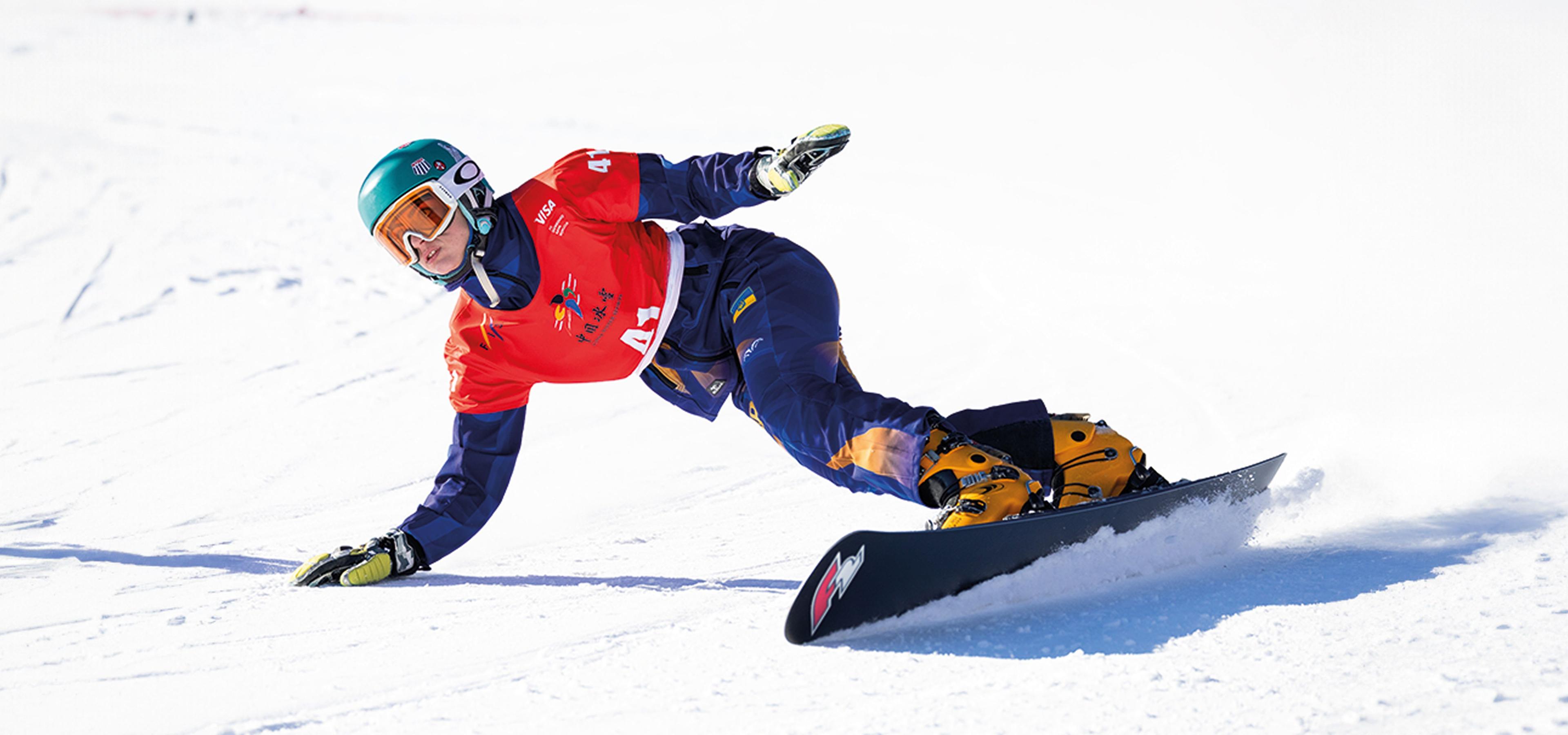
The youngest of the ski sports cultivated by the FIS. If in 1998 snowboarding was first introduced to the program of the Winter Olympic Games with competitions in parallel giant slalom, then the Olympic program of Salt Lake City (2002) already included two events: giant slalom and snowboardcross. At the Winter Olympic Games in Turin (2006), half-pipe competitions were added to the medal competitions.
None of the ski disciplines has had such rapid Olympic development, which indicates the extraordinary interest of extreme sports enthusiasts around the world in this sport.
Back in 1929, a certain M.J. "Jack" Barchet rolled down a mountain on a wide board with a clothesline instead of a handlebar and somehow registered this fact. However, the "official" date of the birth of snowboarding history is considered to be the mid-50s of the last century. It was then that ardent supporters of surfing and skateboarding began to master a new surface - snow space. The history of snowboarding represents, so to speak, a harmonious eclecticism of the elements of the essence of three sports at once - skateboarding, surfing and alpine skiing.
In the large family of the International Ski Federation (FIS), snowboarding is the youngest of the disciplines, which successfully combines the classic traditions of alpine skiing and innovative trends of the modern era. The variety of competitive tracks, the dynamism of competition formats and victory criteria best satisfy the democratic tastes of the new generation. Today, the snowboarding system includes seven types of competitions, which are quite clearly divided into two groups:
The peculiar design of the competition track in the half-pipe, resembling half of a concave hollow cylinder, determines the uniqueness and originality of competitions in this artistic type. Five judges evaluate the overall impression of the series of jumps, tricks and other maneuvers performed by the athlete during the descent along the track, taking into account the complexity of the technical elements, errors and snowboard control during their execution, as well as the participant's ability to use the terrain of the track as effectively as possible.
The youngest type of snowboarding competition - slopestyle - has just been included in the official FIS list, but is already quite popular. According to the competition rules, participants perform a descent along the track with various structural elements: fan boxes, flat jumps, waves, mini-jumps, etc. Athletes themselves choose the line of the track, during which they perform a series of tricks, using structures and terrain. The skill of execution is assessed on a ten-point scale based on the overall impression of the route, including an assessment of the chosen trajectory of the descent and the use of structures. In the qualifying round, participants perform two qualifying runs and, based on the best of them, compete for the right to enter the finals (10 participants among men and 6 among women), where the winner is determined.
The most dynamic, exciting and spectacular type of snowboarding is snowboardcross. Strength and speed, immediacy and chance, excitement and fortune - these are the characteristic features of these "crazy races", which attract the attention of thousands of fans and spectators. The time results of the qualifying runs on a track marked with gates with natural and artificial obstacles (springboards, counterslopes, compressions, pools) determine the 32 fastest participants who enter the final round. Then the athletes start four participants on one track, of which only two pass to the next round. The spectacular value of snowboardcross is significantly increased by the rather high risk of injury to the participants. However, the exciting impressions of the competition for both spectators and athletes, as well as the regulated safety measures, negate almost all concerns.